(🇪🇸 Leer la versión en español aquí)
Closing out a chaotic stretch marked by aviation ground stops, bank glitches, Exchange Online meltdowns, and wild social-media blackout rumors, even the U.S. National Security Agency’s classified internal network (NSANet) suffered a temporary degradation starting November 17, pushing National Security Adviser Marco Rubio and Director of National Intelligence Jay Clayton to reassure lawmakers and the public on November 18, as reported by CNN, The Guardian, and PBS NewsHour.
Their conclusion was unequivocal: there is "zero evidence" linking the glitches into a coordinated foreign cyberattack. Instead, officials and reporting detailed by SC Media pointed to a far more mundane culprit behind NSANet’s disruption: routine maintenance and security patching on internal infrastructure.
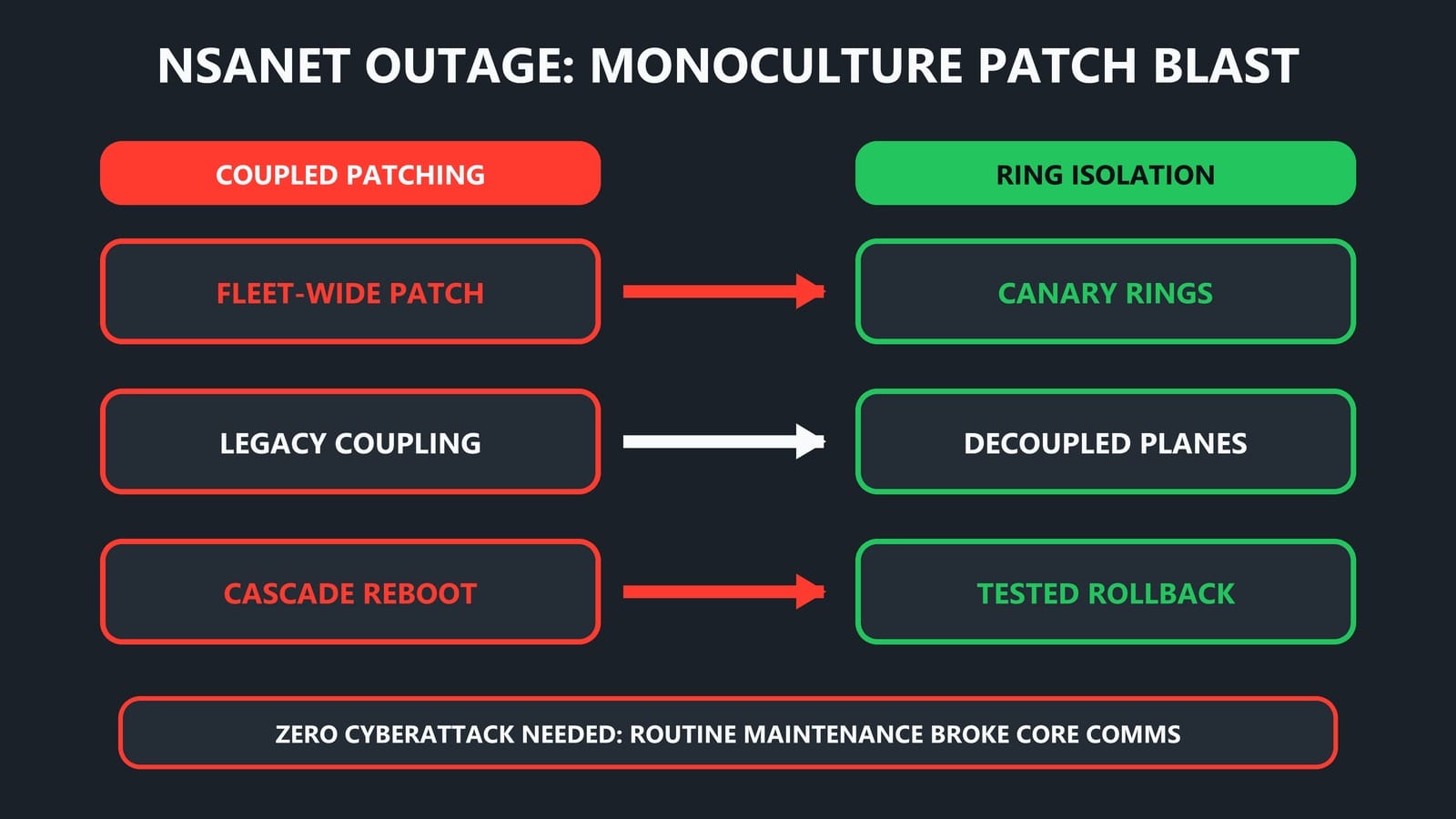
You Don't Need Foreign Hackers When Correlated Patching Hits Legacy Stack
While the absence of a coordinated nation-state attack debunks viral doomscrolling — much like our teardown of the November 17 internet blackout rumor — SRE engineers shouldn't treat "routine maintenance did it" as comforting news:
- Correlated remediation windows: whenever high-severity security advisories hit core OS kernels, mail servers, or routing firmware simultaneously, public and private operators push emergency patches within the exact same 48-hour window.
- Brittle legacy coupling: updating tightly coupled internal networks exposes edge-case timer bugs, expiring internal certs, and reboot race conditions that never show up in lightly loaded staging labs.
- Brittle manual fallback paths: if a classified defense network still has to fall back to awkward workarounds during patch hiccups, enterprise SaaS shops with zero out-of-band resilience freeze completely whenever primary auth or email drops.
| Operational Failure Mode | How "Routine" Maintenance Breaks Prod | Production Reliability Guardrail |
|---|---|---|
| Fleet-wide simultaneous patching | Pushing kernel/firmware updates across 100% of nodes at once | Strict progressive canary rings (1% → 10% → regional rollout) |
| Uncapped control-plane blast radius | Global network/capacity change cascading across dependent zones | Isolated failure domains + automated circuit breakers |
| Shared-fate emergency comms | Incident bridges hosted on the exact same cloud stack that fell over | Out-of-band runbooks, UTC log discipline & offline local utilities |
Three Concrete Resilience Audits for SRE & Security Teams
- Measure real failure-domain independence before your next patch wave: verify whether identity, DNS, and mail rely on single shared control planes (check real uptime tolerance inside our SLA uptime & error budget calculator and review our post-mortem on Microsoft 365’s Exchange capacity cascade).
- Enforce strict UTC / RFC 3339 timestamp discipline across war rooms: correlating incident logs between Fort Meade, London, and Madrid wastes precious MTTR minutes if teams mix local timezones; normalize timestamps offline with our new World Timezone, UTC, CET & RFC 3339 converter.
- Keep critical diagnostic scripts and tools usable completely offline: never depend exclusively on third-party web SaaS tools during a widespread cloud or ISP outage.
Foreign adversaries didn't synchronize this week’s outage cascade — modern software complexity, correlated patch urgency, and tightly coupled legacy plumbing did it all by themselves.
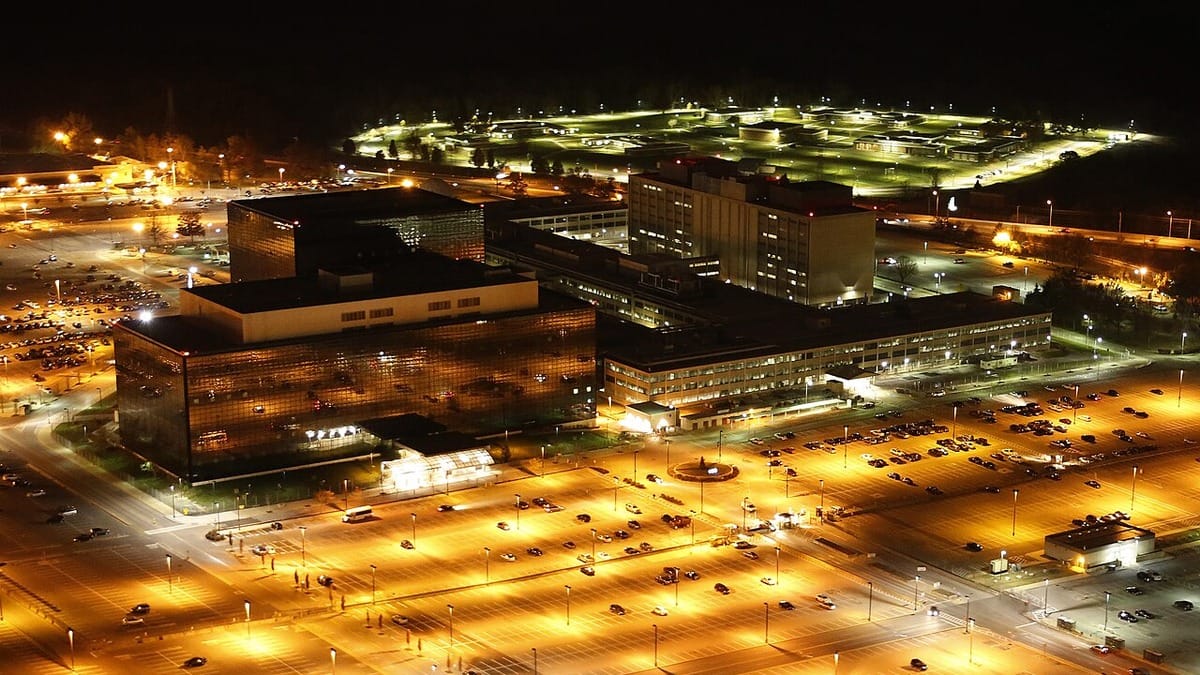
Credits: Syncroma Studio. Cover photo: NSA headquarters at Fort Meade, Maryland (Wikimedia Commons, CC0); original editorial infographic by Syncroma Studio.
Sistemas reales, sin humo corporativo Real systems, zero corporate hype
Recibe los análisis a fondo sobre arquitectura, consumo de recursos y computación de bajo nivel directamente en tu bandeja de entrada. Get deep-dive software architecture, resource consumption metrics, and low-level computing essays delivered straight to your inbox.
Suscribirse a Syncroma Subscribe to Syncroma

