(🇪🇸 Leer la versión en español aquí)
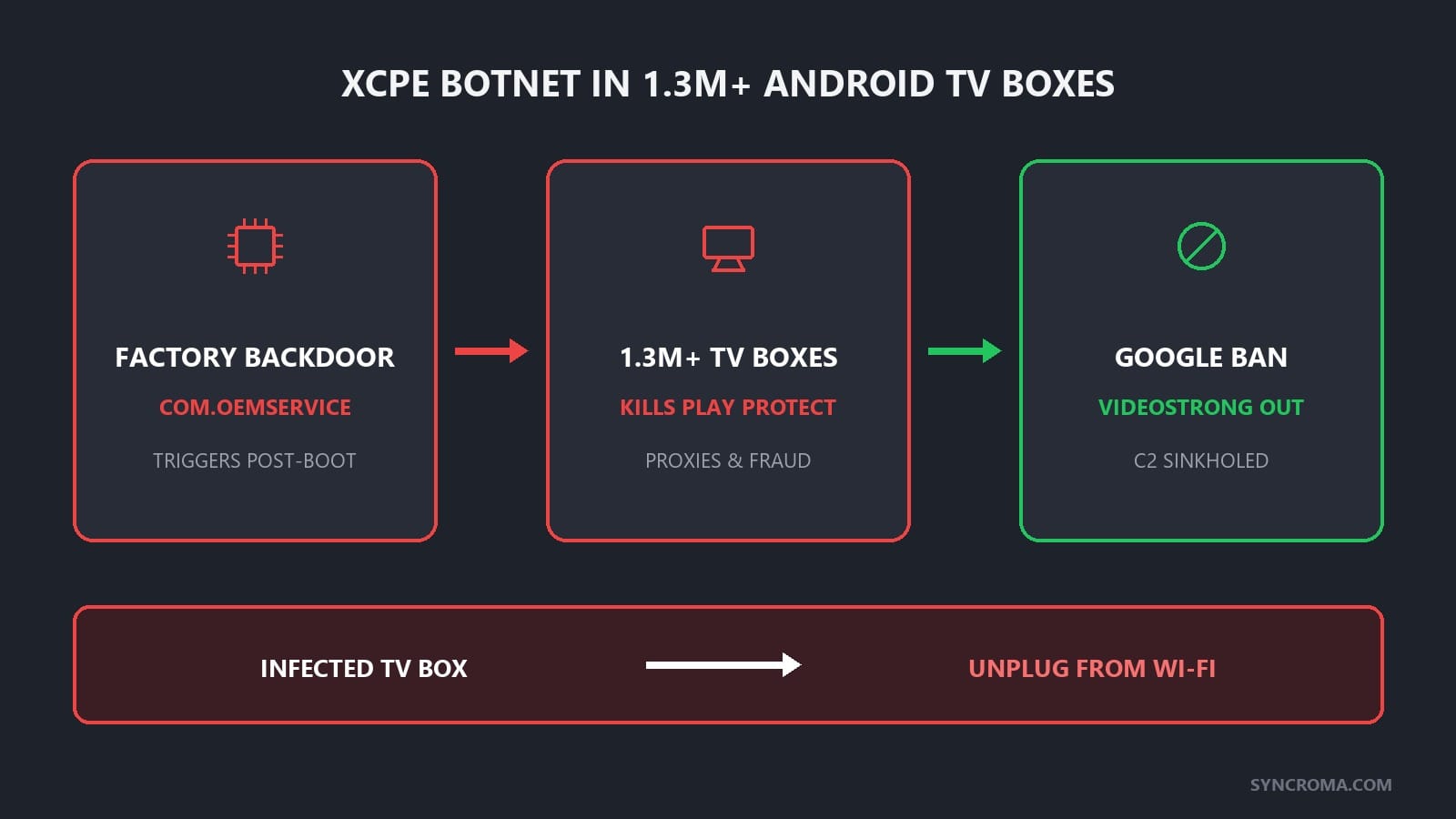
Millions of households buy budget Android TV streaming boxes to upgrade an older living-room television without realizing the risk may already be baked straight into firmware before unboxing. Google’s Threat Intelligence Group (GTIG)—working alongside Japan’s National Police Agency plus Lumen, HUMAN Security, Plume, Synthient, and TrendAI—just dismantled the XCPE botnet embedded inside more than 1.3 million Android TV set-top boxes (Google Cloud Threat Intelligence, BleepingComputer).
Unlike consumer trojans installed via shady sideloaded APKs, Google stated it assesses with high confidence that Chinese manufacturer Videostrong Technology Co. deliberately built, shipped, and monetized the persistent backdoor for financial gain. In response, Google terminated its partnership, revoked Videostrong’s license to ship Android TV hardware with Google apps, and banned the manufacturer and its affiliates from certified Android ecosystems (BleepingComputer).
Inside x.cpe and com.oemservice: How Factory Firmware Evaded Certification
GTIG’s breakdown exposes an industrial supply-chain backdoor engineered specifically to stay silent during compliance lab checks and wake up once plugged into a customer’s Wi-Fi router (Google Cloud Threat Intelligence, BleepingComputer):
- Post-boot trigger & system privileges: Tracked under components
x.cpeandcom.oemservice, the implant ran at Android system-level privileges and delayed payload execution until after initial device setup to slip past compatibility testing. - MQTT remote shell & Play Protect kill switch: On startup, infected boxes pinged version-specific subdomains of
anyevonline[.]comfor credentials to connect to an MQTT broker atmqtt.szbboys[.]com. From there, operators could disable Google Play Protect, run system shell scripts, capture screenshots, inject keystrokes, open reverse shells, and silently install APKs (BleepingComputer). - Monetized plugin marketplace & 10M+ collateral devices: Videostrong allegedly leased access to cybercriminal affiliates pushing ad-fraud plugins and residential proxy modules tied to networks including Linkfog, AppSalt/Honeygain, GaGaNode, NetNut, and Traffmonetizer—mirroring proxy-hijacking abuses we recently analyzed inside free Steam and iPhone games. Disrupting overlapping affiliate C2 servers also cut off at least 10 million additional compromised devices, spanning retail boxes, karaoke machines, and telehealth hardware (BleepingComputer).
Why Factory Backdoors Break Every Standard Home Security Assumption
| Layer | Buyer Expectation | Reality Inside XCPE Firmware |
Why Factory Reset Doesn’t Fix It |
|---|---|---|---|
System ROM (/system) |
Harmless budget streaming appliance. | com.oemservice activates post-boot with full OS privileges (BleepingComputer). |
Hardcoded inside vendor firmware partitions; wiping user data restores the implant intact. |
| On-device defense | Google Play Protect watches bad apps. | Remote MQTT commands silently disable Play Protect (GTIG). | System-level malware outranks consumer security toggles. |
| Home network | Protected behind ISP NAT / firewall. | Device dials outbound to C2 and bridges stranger proxy traffic into LAN. | Lateral scanning reaches laptops, phones, and local NAS boxes on the same SSID. |
Practical Defense Steps for Any Living-Room Streaming Box
- Quarantine unknown media boxes onto an isolated Guest/IoT VLAN: Never drop budget smart TVs, off-brand Android TV boxes, or smart appliances onto the same flat Wi-Fi subnet holding work laptops, personal phones, or local storage.
- Replace compromised hardware—don’t rely on resets: If a device model has undocumented outbound DNS hits (e.g.,
anyevonline[.]comor mystery MQTT brokers), physically unplug it. Only flashing verified clean firmware or replacing the box permanently removes/systemimplants. - Verify household & credential hygiene: If suspicious proxy activity hit your home IP, rotate sensitive logins cleanly via our Password Entropy & Crack-Time Auditor and measure what always-on living-room appliances actually cost 24/7 with our Home Appliance & Homelab kWh Calculator.
Banning Videostrong cuts off future certified Google Play supply, yet the operational warning remains urgent: when an unverified OEM embeds system-level monetization inside /system, your home firewall can’t stop a threat you plugged in yourself.
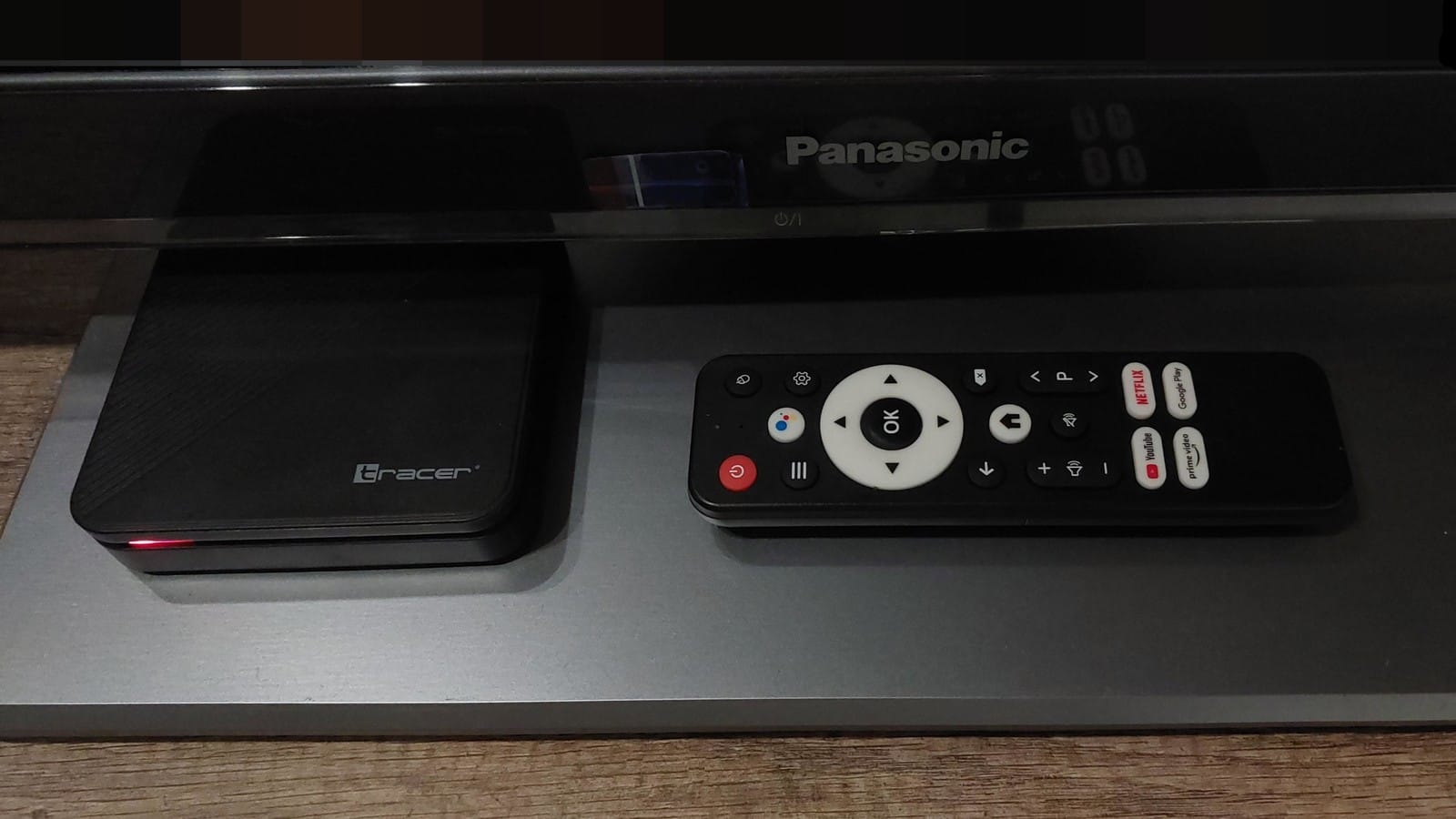
Visual credits: Syncroma Studio (technical infographic). Cover photograph: Oliwier Jaszczyszyn — Android TV-based Tracer set top box via Wikimedia Commons (CC BY-SA 4.0).

Sistemas reales, sin humo corporativo Real systems, zero corporate hype
Recibe los análisis a fondo sobre arquitectura, consumo de recursos y computación de bajo nivel directamente en tu bandeja de entrada. Get deep-dive software architecture, resource consumption metrics, and low-level computing essays delivered straight to your inbox.
Suscribirse a Syncroma Subscribe to Syncroma

