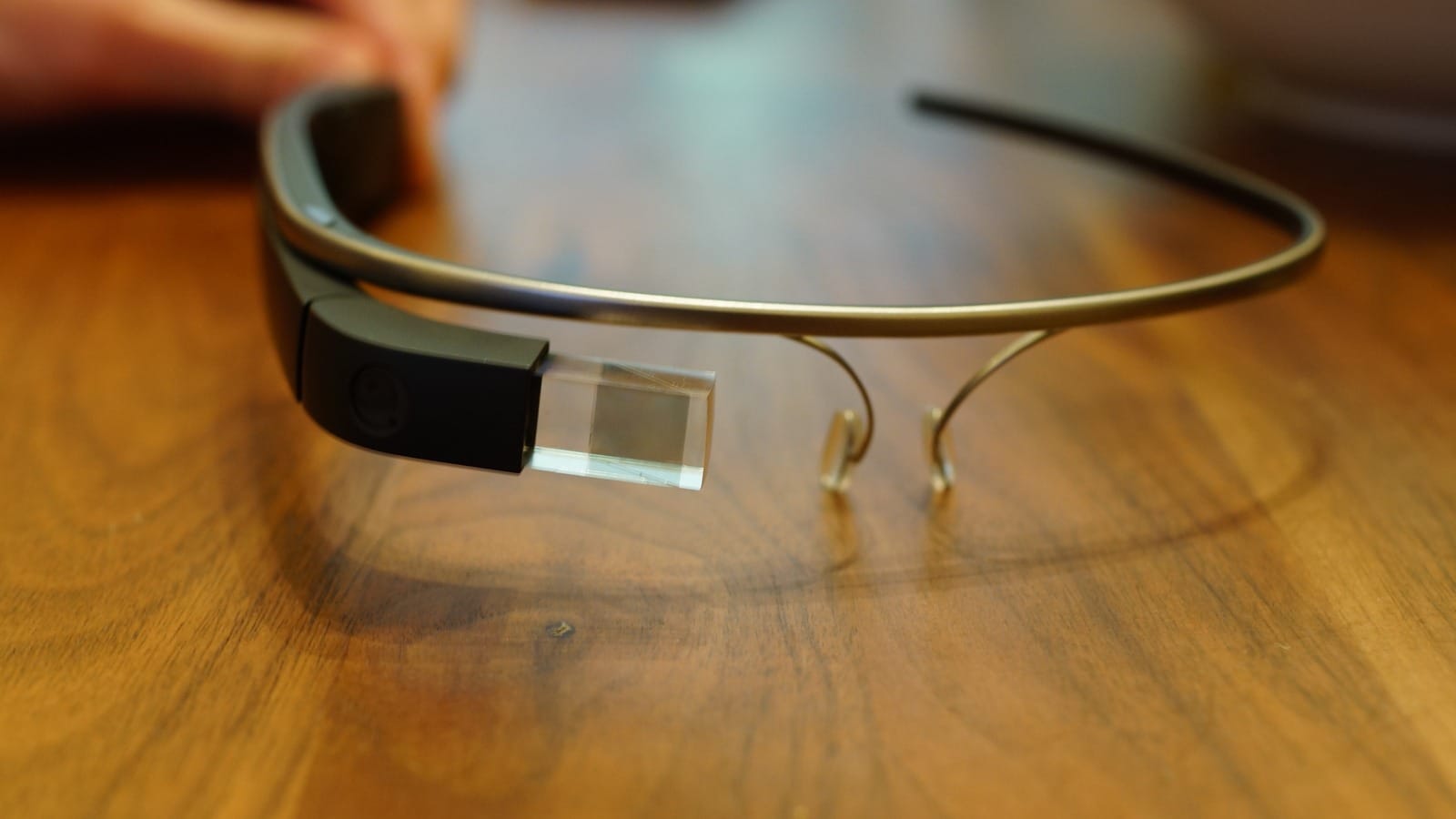
(🇪🇸 Leer la versión en español aquí)
More than a decade after Google Glass became a cautionary tale about wearable social backlash, Google is back on consumer faces with Gemini-powered smartglasses starting at $395, built alongside Samsung, Warby Parker, and Gentle Monster. Writing on the official Google safety blog, XR VP and GM Shahram Izadi framed privacy as hardware armor rather than fine print: physical camera shutters, an outward recording LED, and automatic bystander face redaction.
Details covered around the launch by Emergent and The Rundown split the lineup across three hardware tiers—while raising real engineering questions about battery life and phone-tethered latency.
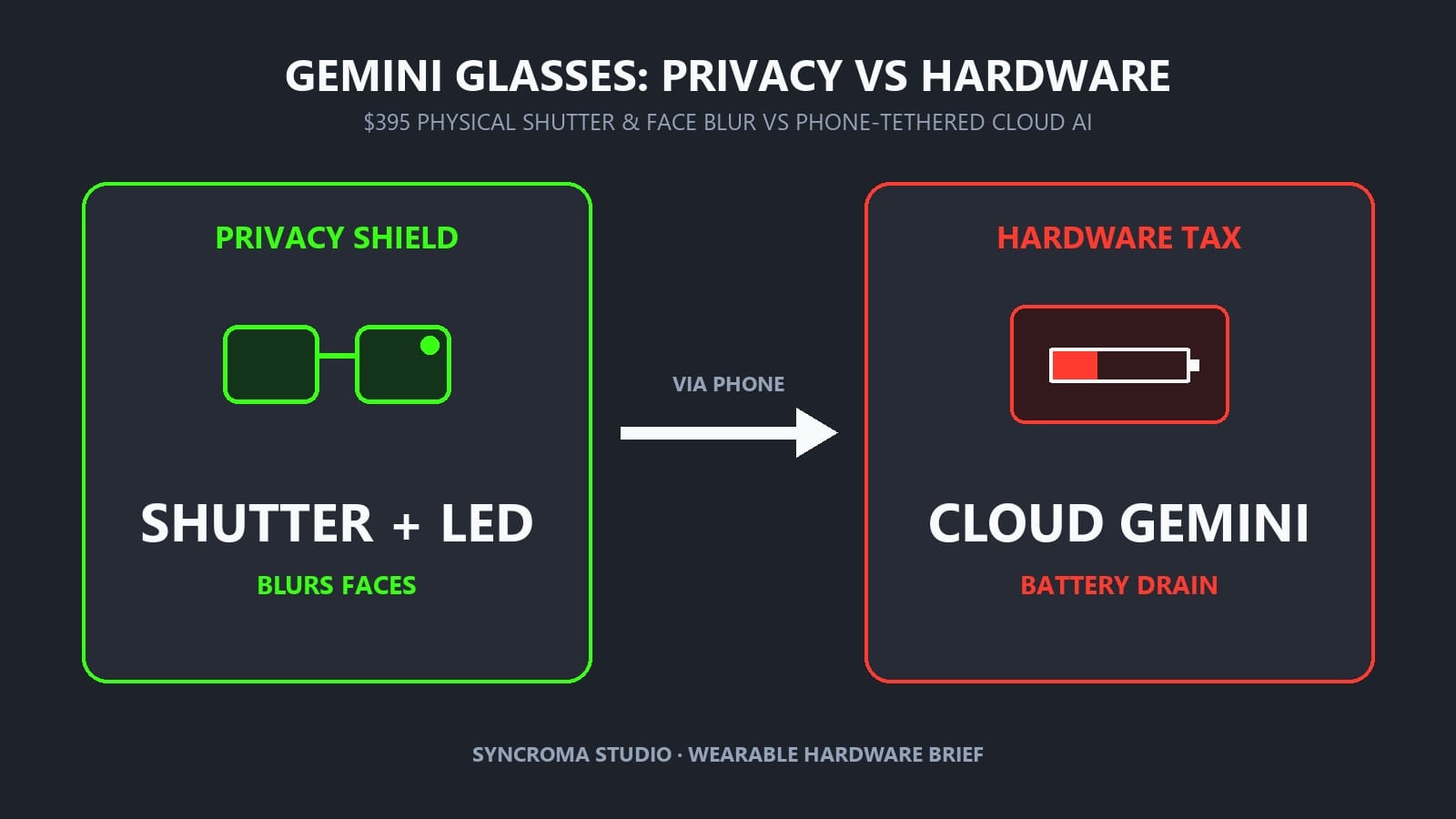
Hardware Guardrails vs. Software Promises
Moving privacy enforcement out of legal EULAs and onto physical switches inside eyeglass temples meaningfully raises the bar for everyday wearables:
| Layer | Declared Technical Control | Why It Matters vs. Always-On Eyewear |
|---|---|---|
| Tiers & Entry Price | 3 tiers: $395 voice/AI frames, mid display-overlay, premium full-AR | Undercuts standalone AR headsets while shipping mainstream frames |
| Physical Cutoff & LED | Physical power-off switch, camera shutter & outward indicator LED | Bystanders can visibly confirm when optics are off vs. capturing |
| Bystander Pre-Filtering | Automatic face redaction + beamforming mics locked on wearer's voice | Strips random street faces & chatter before Gemini handles context |
| Cloud Storage Policy | Encrypted visual telemetry excluded from Gemini History, ads & training | Avoids backlash seen across rival photo-scraping mobile apps |
That training exclusion matters sharply right now—especially as rivals like Meta face €805M EU privacy fines over silent photo-gallery scanning on user devices.
Physics Still Wins Inside Eyeglass Temples
Before treating $395 AI glasses as self-contained spatial computers, check the thermodynamic reality inside those slim frames:
- Phone-tethered cloud round-trips: Thin temples lack both the silicon area and battery density to run frontier multimodal vision models locally. Asking Gemini to read a street sign still means compressing frames over Bluetooth/Wi-Fi to your handset and up to Google TPUs—inheriting the exact mobile tail latency hitting Gemini Live's 66 new cloud voices.
- Real-time redaction battery tax: Running continuous computer vision to blur passerby faces alongside directional microphone DSP drains milliwatt-hour batteries fast whenever video capture runs longer than quick single-shot queries.
- Strip leftover metadata yourself: Any camera capture exported to laptops or websites carries device telemetry by default. Always scrub personal tags offline before publishing images via our private EXIF and GPS metadata viewer, or assemble brand web assets locally using our new private favicon.ico & PWA icon generator.
Verdict
Shipping a physical shutoff switch, visible LED, and automatic bystander face blur at $395 sets the right hardware baseline for smart eyewear in 2026: privacy constraints belong in silicon and switches, not buried three menus deep inside an Android companion app. Just remember that behind the stylish Samsung and Warby Parker frames, heavy visual AI still lives on your smartphone radio and Google's cloud bill—not natively on the bridge of your nose.
Visual Credit: Smart eyewear cover photo adapted from "Google Glass Explorer Edition" (Wikimedia Commons, CC BY-SA 2.0). Infographic created by Syncroma Studio.

Sistemas reales, sin humo corporativo Real systems, zero corporate hype
Recibe los análisis a fondo sobre arquitectura, consumo de recursos y computación de bajo nivel directamente en tu bandeja de entrada. Get deep-dive software architecture, resource consumption metrics, and low-level computing essays delivered straight to your inbox.
Suscribirse a Syncroma Subscribe to Syncroma

