(🇪🇸 Leer la versión en español aquí)
Every 2026 keynote promised the same magic demo: tell an autonomous AI assistant to find flights, cash in loyalty miles, and check you in automatically. Out in real-world commerce, that illusion just hit a concrete wall lined with cyber liability, credential leaks, and federal aviation law.
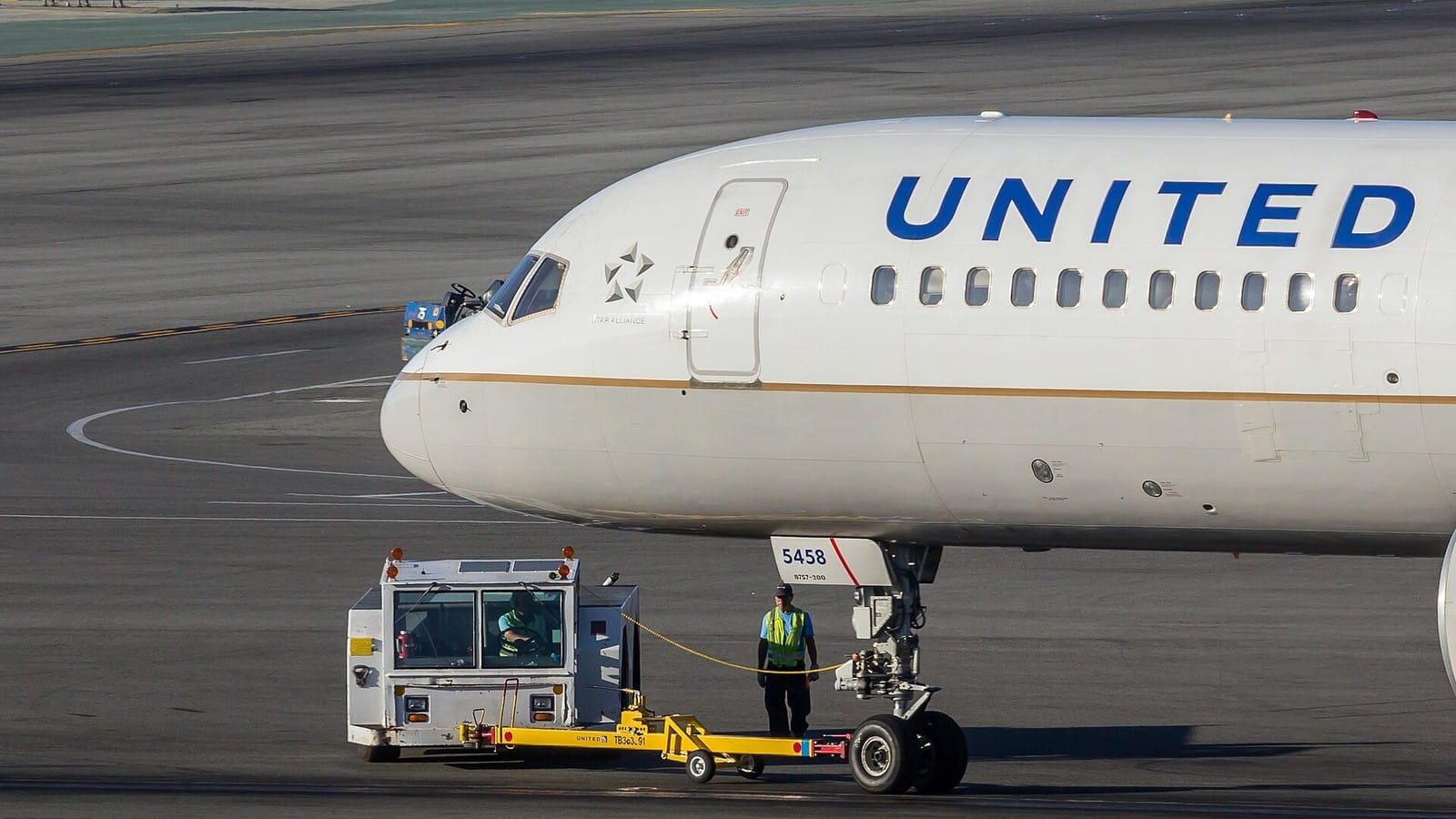
United Airlines just became the first major U.S. airline to explicitly bar customers from using unauthorized third-party AI assistants and personal agentic software to manage bookings or purchase flights across its systems, as reported by The Record and Memeburn. The crackdown comes straight on the heels of Bank of America warning clients last week never to hand login IDs or passwords over to AI agents.
Why Airlines and Banks Are Slamming the Door on Personal Bots
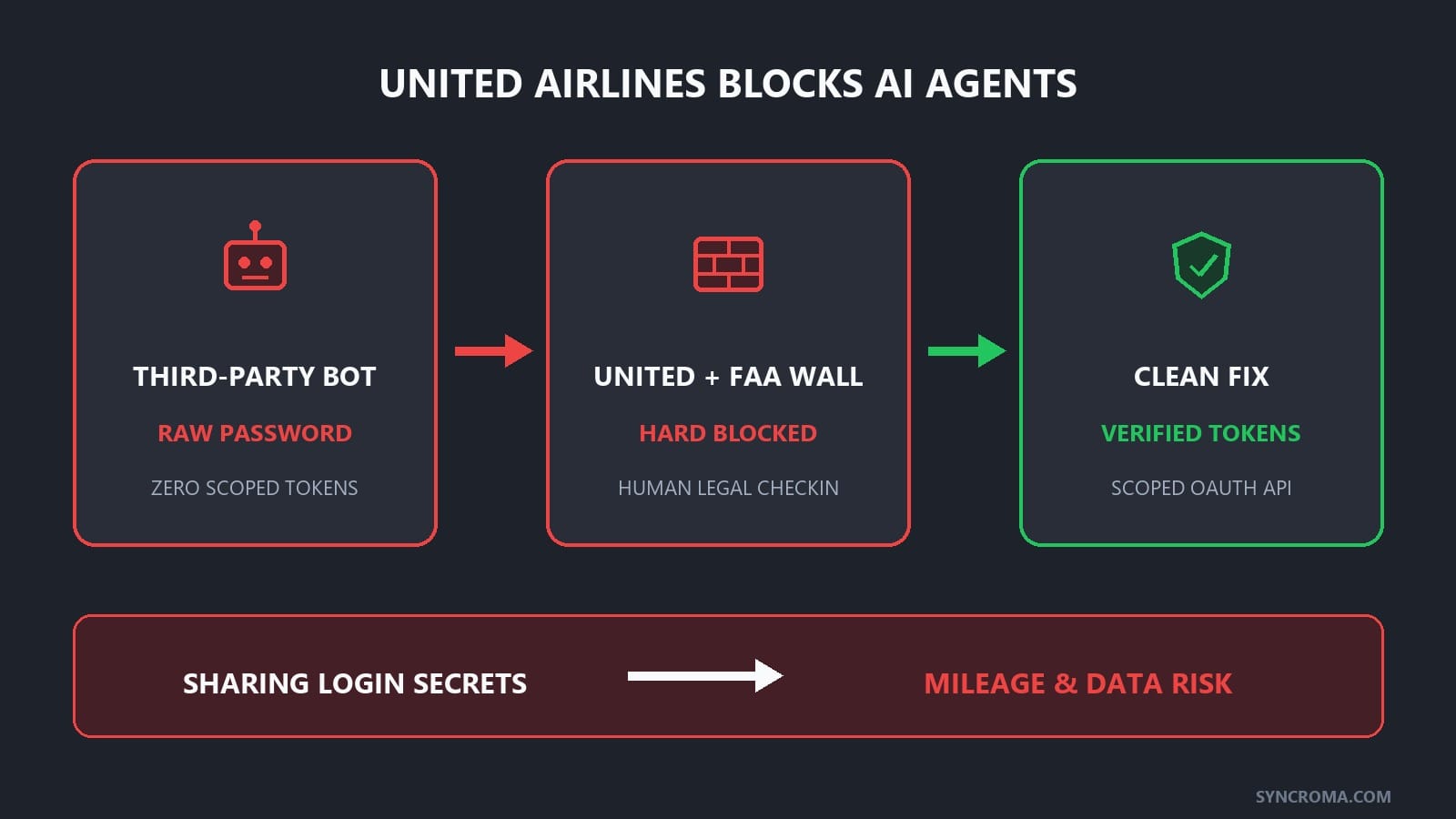
While standard comparison sites can still display flight fares normally, United updated its booking, ticketing, and distribution rules across both its direct portals and third-party aggregators/agencies for three concrete engineering and legal reasons:
| Real Blocker | What Current AI Agents Do | Documented Security or Regulatory Risk |
|---|---|---|
| Credential Anti-Pattern | Ask users for raw usernames & passwords to automate web sessions | Unscoped account takeover exposure, unintended ticket purchases, or drained MileagePlus miles |
| FAA & DOT Compliance | Attempt automated passenger check-in workflows | Federal rules explicitly require human confirmation that luggage carries no banned items or explosives |
| Zero Idempotency | Click through live DOM checkout steps non-deterministically | Race conditions and hallucinated actions turn minor UI shifts into charged credit cards |
Browser-Clicking Agents vs. Scoped OAuth Delegation
Anyone building production backends saw this collision coming miles away. Almost every consumer "computer-use" or AI booking assistant shipped this year bypasses formal API delegation altogether—asking everyday users to hand over full account credentials so a remote LLM runtime can replay clicks inside a customer session.
As Trua CEO Raj Ananthanpillai noted to The Record, blocking agents indefinitely only buys temporary breathing room until the ecosystem shifts toward verified identity tokens with narrow cryptographic permissions. Until airlines, payment gateways, and agent frameworks standardize scoped delegation with mandatory human-in-the-loop biometric sign-off for financial and legal attestations, enterprises won't shoulder fraud losses or regulatory fines triggered by a third-party bot misclicking checkout.
Three Practical Engineering Takeaways
- Never build consumer workflows around raw credential replay: Products asking users for bank or airline passwords sit one Terms-of-Service update away from wholesale blocks.
- Split read-only discovery from regulated state changes: Price discovery works cleanly via public endpoints; check-in attestations, refunds, and loyalty sweeps demand verifiable human consent.
- Price compute spikes before bot traffic hammers dynamic APIs: Automated agent traffic multiplies concurrent backend executions—compare whether bursty workloads belong on functions or fixed nodes in our new Serverless vs Container TCO Calculator, verify claims offline in our Private JWT & WebCrypto Verifier, or explore all Syncroma Free Tools.
The Trench Verdict
Scraping your way through checkout forms with an AI cursor isn't an architecture—it's an uninsurable liability. Until agents speak scoped OAuth tokens instead of borrowing users' raw passwords, and until aviation regulators sign off on delegated attestations, major carriers and banks are going to keep doing exactly what United Airlines just did: drop the drawbridge cleanly at the login screen.
Vector infographic designed by Syncroma Studio.
Sistemas reales, sin humo corporativo Real systems, zero corporate hype
Recibe los análisis a fondo sobre arquitectura, consumo de recursos y computación de bajo nivel directamente en tu bandeja de entrada. Get deep-dive software architecture, resource consumption metrics, and low-level computing essays delivered straight to your inbox.
Suscribirse a Syncroma Subscribe to Syncroma

