(🇪🇸 Leer la versión en español aquí)
Few security threads split engineering teams this quarter like the viral essay "Passkeys are a trap. Do not use them" — and the blunt pushback from Apple authentication engineer Ricky Mondello and security researcher Scott Helme. Critics warn passkeys hide a Trojan horse for hardware attestation monopolies, while defenders dismiss those fears as conspiracy theories leaving users exposed to classic credential phishing.
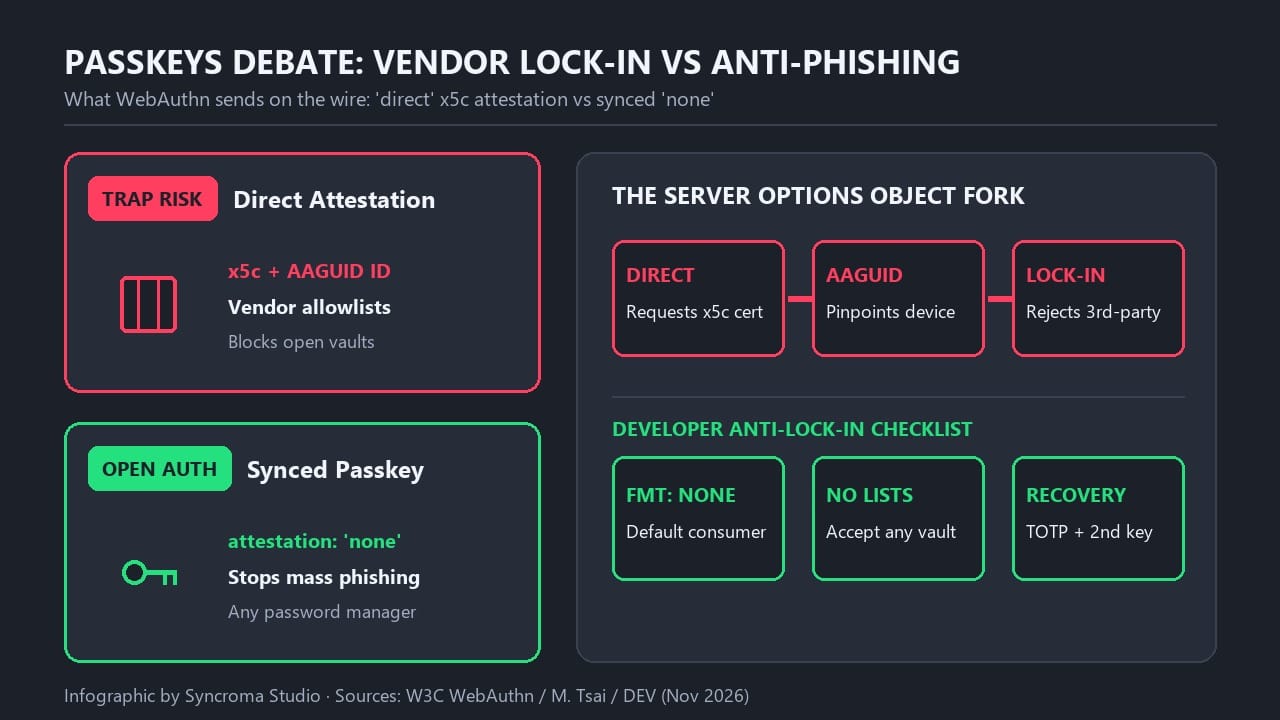
Inspect what a browser actually transmits over WebAuthn during registration, and both camps miss the operational lever: whether passkeys stay open or lock out third-party vaults sits inside one backend server option, as wire-level decodes in DEV Community, Michael Tsai, and Jonas Thiem make crystal clear.
Decoding Real WebAuthn Packets: fmt: none vs. x5c
When DEV Community decoded real attestationObject payloads generated via Chromium's virtual authenticator, the spec split became unmistakable:
| WebAuthn Wire Field | Consumer Synced Passkey (attestation: "none") |
Hardware Key (attestation: "direct") |
Practical Engineering Reality |
|---|---|---|---|
attestationObject.fmt |
"none" (empty statement) |
x5c X.509 cert chain |
With "none", websites get zero proof of device vendor or OS |
AAGUID Identifier |
Zeroed / ignored in consumer auth | Exact make & model vs. FIDO MDS | The real lever: servers can enforce AAGUID allowlists to ban rival vaults |
AT Flag in authenticatorData |
Set (Attested Credential Data) |
Set (Attested Credential Data) |
Common bug: AT simply means credential key data exists — NOT attested |
BE / BS Backup Flags |
Signals cloud-synced eligibility | Typically 0 on raw hardware keys |
Prompt users with BS=0 to add a backup factor instead of blocking them |
| Browser Ecosystem Stance | Open to Apple, Google, Bitwarden, KeePassXC | Enterprise / compliance keys | Major browsers currently refuse strict attestation on mass consumer web logins |
Why Both Sides Are Half-Right
- Why Apple's Ricky Mondello is right today: As captured via Michael Tsai, browser makers and credential-manager teams intentionally fought back when banks demanded strict hardware attestation early in passkey rollouts — specifically so Bitwarden, 1Password, and KeePassXC would never be locked out. Eliminating phishable shared passwords remains the single largest security win in consumer authentication.
- Why lock-in skeptics aren't imagining things: Outside pure WebAuthn consumer defaults, hardware-bound attestation pressure is escalating via Google Play Integrity, Apple App Attest, and European open-source age-verification architecture debates that disadvantage custom Android ROMs, Linux desktops, and independent builds. Worse, scattered sites already ship sloppy
AAGUIDallowlists in backend configs, silently breaking smaller passkey managers on login day.
How Developers Ship Passkeys Without Trapping Users
- Keep
attestation: "none"for consumer apps: Never demandx5cchains unless regulatory contracts strictly dictate specific hardware tokens. - Never enforce
AAGUIDallowlists: Let users bring iCloud Keychain, Google Password Manager, Bitwarden, 1Password, KeePassXC, or physical keys seamlessly. - Keep backup auth & verify downstream tokens cleanly: Never leave passkeys as an unrecoverable SPOF (always permit TOTP or secondary keys), validate post-login session tokens locally with our private WebCrypto JWT auditor, verify binary checksums via the private SHA-256 & HMAC verifier, and harden origin headers using our private HTTP CORS header builder.
Passkeys kill phishable passwords without locking anyone in — provided engineers stop writing backend AAGUID gates that build the trap themselves.
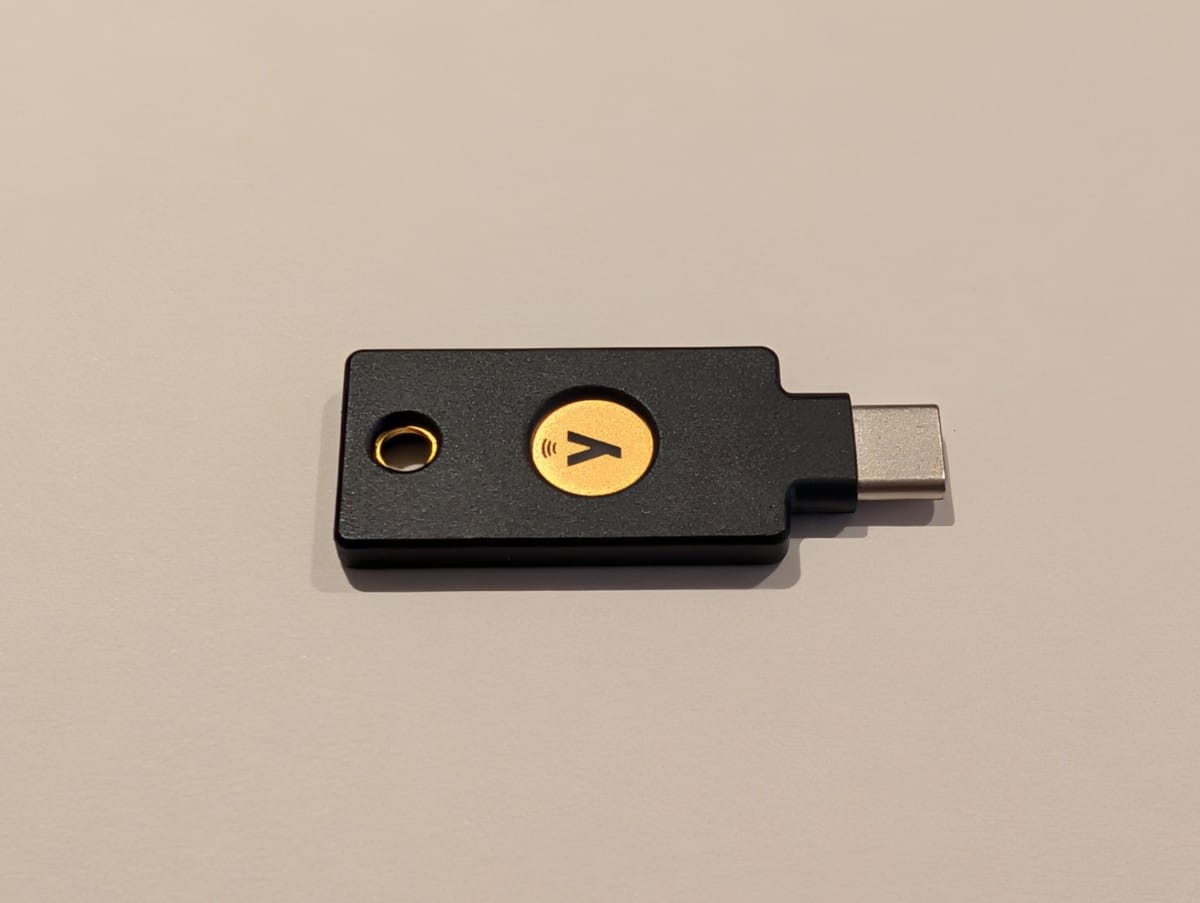
Article and infographic by Syncroma Studio. Cover photo: YubiKey 5C NFC FIDO2/WebAuthn hardware security key, photographed by Addshore on Wikimedia Commons (CC BY-SA 4.0).

Sistemas reales, sin humo corporativo Real systems, zero corporate hype
Recibe los análisis a fondo sobre arquitectura, consumo de recursos y computación de bajo nivel directamente en tu bandeja de entrada. Get deep-dive software architecture, resource consumption metrics, and low-level computing essays delivered straight to your inbox.
Suscribirse a Syncroma Subscribe to Syncroma

