(🇪🇸 Leer la versión en español aquí)
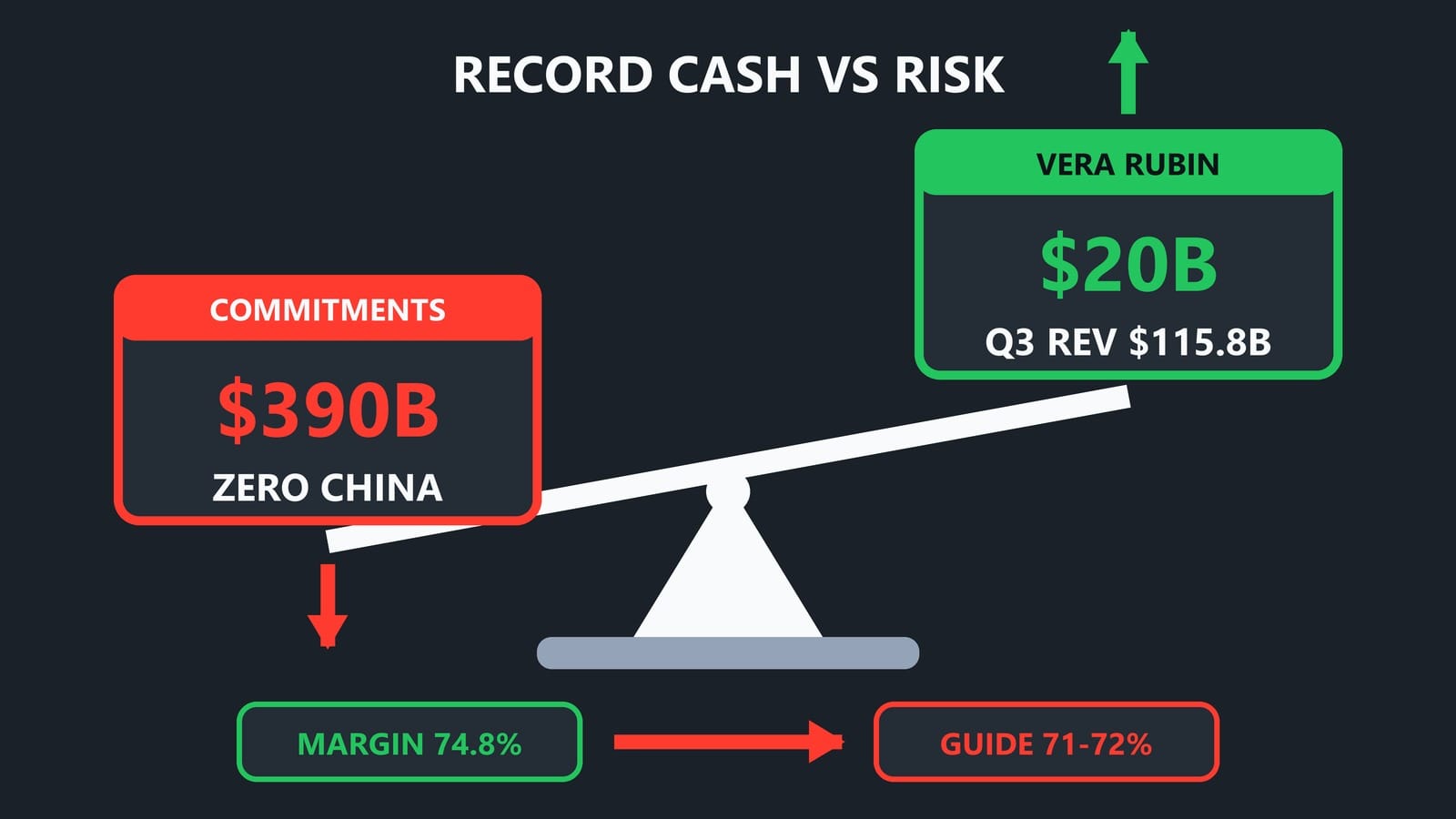
While Wall Street celebrates another headline-grabbing quarter—$115.8 billion in Q3 FY27 revenue, up 103% year over year—the underlying engineering and supply-chain footnotes tell a far sharper story for anyone buying GPU racks or paying cloud inference bills. Nvidia's first full fiscal quarter since Jensen Huang's exit, led by interim CEO Colette Kress and board chair Harvey Jones, hinges on two numbers infrastructure buyers should examine before touching a 36-month reservation: $390 billion in supply and capacity commitments, and an incoming gross-margin squeeze triggered by the Vera Rubin ramp.
According to Nvidia's official Q3 FY27 financial release (for the quarter ended October 25, 2026), Data Center revenue reached $107.6 billion, roughly 93% of total sales. Beneath that torrent of cash sits the largest prepaid bet on silicon wafers, CoWoS packaging, and HBM memory in semiconductor history.
The Operational Reality Behind the $115.8B Quarter
Drilling into the filings and conference call coverage reported by Tom's Hardware and TechPowerUp, the hardware economics show exactly where margins are expanding and where physical rack-scale manufacturing starts biting back:
| Operational Metric (Q3 FY27 & Q4 Guide) | Reported Figure | Infrastructure & Cloud Impact |
|---|---|---|
| Total Q3 FY27 Revenue | $115.8B (+103% YoY) | Beat ~$109B consensus estimates |
| Data Center Revenue | $107.6B (+110% YoY) | ~93% concentration in hyperscaler & AI clusters |
| GAAP Net Income | $65.3B (+105% YoY) | 56.4% net margin before next-gen ramp pressure |
| Vera Rubin (incl. NVL72) Q3 Revenue | Nearly $20B | First production shipments to Azure, GCP, OCI, CoreWeave, Nebius |
| Supply & Capacity Commitments | $390B | Hard prepaid lock-in for TSMC nodes, packaging & HBM |
| Q4 FY27 Guide & GAAP Gross Margin | $130.0B / 71.0% – 72.0% | Down from 74.8% in Q3; assumes zero China compute |
That nearly 3-percentage-point drop in gross margin (from 74.8% down to 71.0%–72.0%) is the clearest hardware signal in the entire filing. Scaling from Blackwell to liquid-cooled Vera Rubin NVL72 racks demands heavier system integration, expensive memory stacks, and tighter yield budgets during initial volume production.
Why $390B in Commitments With Zero China Matters to Engineering Budgets
As detailed in the Investing.com Q3 FY27 earnings call transcript, Nvidia's $130.0 billion Q4 guidance explicitly assumes zero Data Center compute revenue from China, while locking in $390 billion in upstream supply obligations. For engineering leaders and cloud FinOps teams heading into 2027, that creates three concrete realities:
- Zero near-term price relief on flagship accelerators: A vendor holding $390B in upstream fab and memory obligations cannot slash rack pricing without crushing its own margin floor. If your workloads do not genuinely saturate NVLink all-to-all training fabrics, renting bare-metal flagship GPUs burns margin unnecessarily—benchmark token economics first in our AI API vs Self-Hosted GPU Cost Calculator.
- Power, cooling, and PUE now dictate deployment speed: Shipping nearly $20 billion of Vera Rubin systems to Microsoft Azure, Google Cloud, Oracle, CoreWeave, and Nebius only converts into usable FLOPS if your colocation facility or cloud region has megawatt power and liquid-loop cooling ready. Run the real power-overhead numbers in our GPU Cluster Power, PUE & Server TCO Calculator.
- Most production inference still over-provisions VRAM: Teams keep booking oversized instances for quantized 32B–70B models whose KV cache footprint fits inside a much smaller hardware envelope. Validate exact memory budgets with our LLM VRAM Calculator before signing long-term reservations.
Bottom Line for Infrastructure Architects
Interim CEO Colette Kress and board chair Harvey Jones delivered an unmistakable message: Nvidia returned $28.1 billion via buybacks and dividends in Q3 while locking down the global semiconductor supply chain years in advance.
Yet the systemic bet is staggering. Three hundred and ninety billion dollars in pre-committed wafers, packaging, and memory only clears cleanly if hyperscalers and neoclouds sustain relentless CapEx expansion with zero enterprise AI ROI hangover—all while excluding the Chinese market altogether. Don't mistake Nvidia's revenue moat for a discount on your infrastructure bill: measure tail latency, actual VRAM occupancy, and real kW/PUE overhead before locking into multi-year GPU commitments.
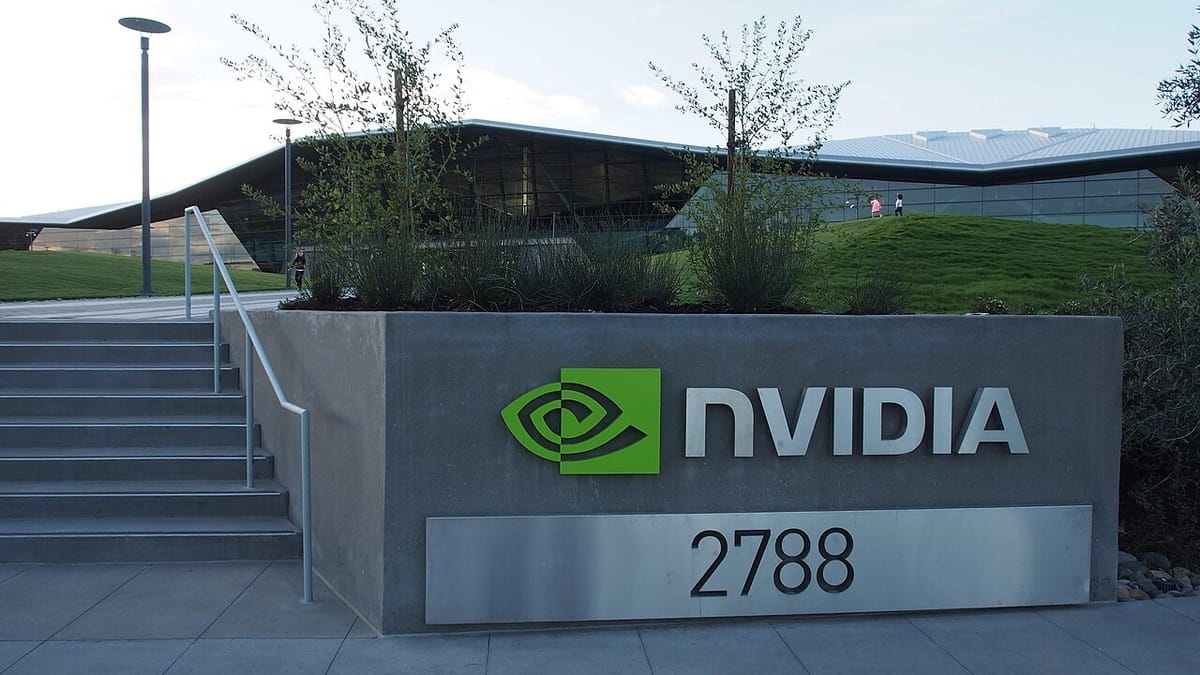
Analysis infographics by Syncroma Studio. Editorial cover photograph via Wikimedia Commons (Daniel J. Prostak, CC BY-SA 4.0).

Sistemas reales, sin humo corporativo Real systems, zero corporate hype
Recibe los análisis a fondo sobre arquitectura, consumo de recursos y computación de bajo nivel directamente en tu bandeja de entrada. Get deep-dive software architecture, resource consumption metrics, and low-level computing essays delivered straight to your inbox.
Suscribirse a Syncroma Subscribe to Syncroma

