
(🇪🇸 Leer la versión en español aquí)
For a decade, every serverless pitch came with the same terrifying asterisk: "Yes, it scales infinitely—and so does your credit card bill if a recursive bug or DDoS loop hits." Email budget alerts merely tell you after the damage cleared your bank. Today, Cloudflare finally pulled back the curtain on real runtime circuit breakers in its engineering post introducing Spend Management in Beta for Pay-As-You-Go (PayGo) Workers and Durable Objects.
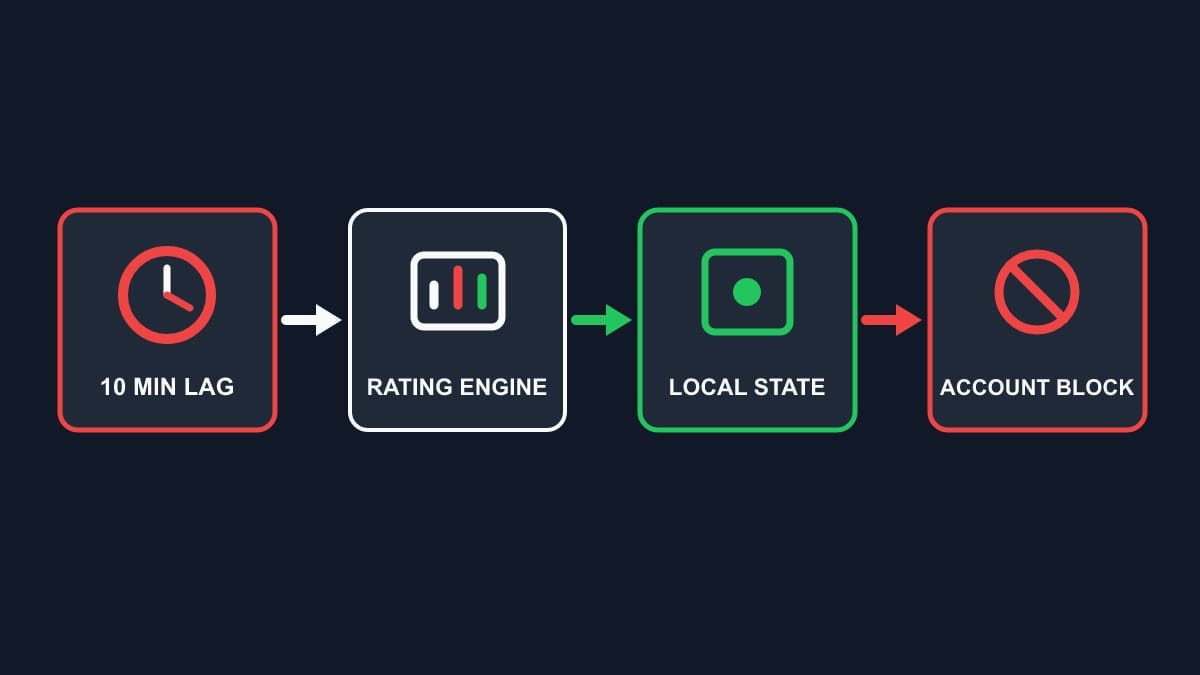
Shipping hard stops instead of polite email warnings is a genuine step forward. Still, reading Cloudflare's distributed metering architecture reveals two operational catches that change how you actually wire production accounts: enforcement lag still sits near 10 minutes, and policies shut down an entire account-level primitive at once, not an isolated runaway script.
Why Billing Cannot Sit Inside the Edge Request Path
Checking an account balance synchronously before booting an isolate across hundreds of global edge locations would destroy P99 latency. Cloudflare kept its Rating Engine completely off the request path and pushed enforcement down to locally refreshed runtime state:
| Pipeline Stage | Window / Mechanism | Engineering Tradeoff |
|---|---|---|
| 1. Two-Stage Aggregation | 1-min buckets → 5-min merged rollups |
Compresses raw telemetry (requests, CPU ms, duration, storage ops) near ingestion while archiving reconciliation data. |
| 2. Account-Partitioned Usage Engine | Partitioned by account_id + disk WAL |
Co-locates usage counters with subscription allowances in local memory backed by a Write-Ahead Log for fast crash recovery. |
| 3. Decoupled Rating Engine | Independent usage & plan streams | Holds unrated records as pending during webhook delays (never giving freebies away) and deducts base allowances before excess rating. |
| 4. Global Quicksilver Push | Async edge KV state propagation | Once nodes refresh local state, runtimes reject paid invocations, Cron Triggers, and Queue consumers—while static assets stay online. |
Configured via UI, cf billing spend-policies create, or POST /client/v4/accounts/{id}/billing/spend-policies ("action": "usage_block"), a triggered limit holds until you raise the cap, remove the policy, or roll into your next billing anchor date (tied to subscription start day, e.g., 10th-to-10th, not calendar months).
The Two Catches: A 10-Minute Burst Window & Coarse Account Blast Radius
Look at how that interacts with reality—especially as Cloudforce One tracks waves of autonomous LLM-driven pentesting scanners hammering exposed infrastructure, or when an AI agent gets trapped calling a Durable Object in a tight loop:
- You can still overshoot badly inside
< 10 minutes: Cloudflare openly notes that end-to-end metering through1m+5maggregation, rating, and async Quicksilver propagation runs in "near real time (under 10 minutes)", with sub-minute enforcement targeted later. Ten minutes of an uncapped edge flood or thousands of runaway Durable Object activations can burn far past your cap before the runtime flips to reject mode. - Account-wide primitive kill switch: Today's caps apply per product primitive per account (
workersordurable_objects). Per-Worker or per-agent-tag isolation is explicitly future work. If one staging prototype triggersthreshold_centson a sharedCLOUDFLARE_ACCOUNT_ID, every production Worker under that account gets paused simultaneously. (Per-user/model AI token budgets still live inside AI Gateway.)
Hardening Serverless Accounts Around Async Caps
- Split production APIs from staging/agent sandboxes by
account_id: never let an experimental AI loop share an account-wide Spend Management circuit breaker with customer-facing traffic—otherwise your cost cap doubles as a self-inflicted outage. - Model burst economics before deploying loops: benchmark runaway inference vs. fixed hardware ceilings using our AI API vs Self-Hosted GPU Calculator and translate an unscheduled
usage_blockpause into downtime minutes via the SLA Uptime & Error Budget Calculator on Syncroma Engineering Tools.
Cloudflare built the cleanest async architecture currently possible at edge scale without taxing every HTTP packet. Until metering-to-block latency drops well under a minute and isolates per script, though, account segmentation remains your real blast-radius shield.
Visuals and infographics produced by Syncroma Studio.
Sistemas reales, sin humo corporativo Real systems, zero corporate hype
Recibe los análisis a fondo sobre arquitectura, consumo de recursos y computación de bajo nivel directamente en tu bandeja de entrada. Get deep-dive software architecture, resource consumption metrics, and low-level computing essays delivered straight to your inbox.
Suscribirse a Syncroma Subscribe to Syncroma

