(🇪🇸 Leer la versión en español aquí)
When a phone crosses the $1,999 threshold, no iOS update can patch a sub-millimeter mechanical clearance flaw. Weeks after Apple shipped its first book-style foldable—selling out initial inventory fast—a wave of early screen failures dubbed "Crackgate" forced Apple to issue a public hardware replacement response.
As reported by Fortune, MacRumors, and Daring Fireball, affected buyers saw bright white lines, dead pixel stripes, or audible pops along the center crease within hours of unboxing. Apple acknowledged "an issue impacting the inner display on a small number of iPhone Duo units" and instructed owners to contact AppleCare directly—even for carrier-purchased phones—emphasizing that affected launch units do not require a paid AppleCare+ plan for replacement.
What iFixit’s CT Scans Actually Found Inside the Hinge
Rather than guessing from blurry forum photos, iFixit’s iPhone Duo teardown—detailed alongside 9to5Mac—built a 3D hinge model from teardown footage, patents, and Lumafield Neptune CT scans, overlaying it straight onto photographs of broken panels:
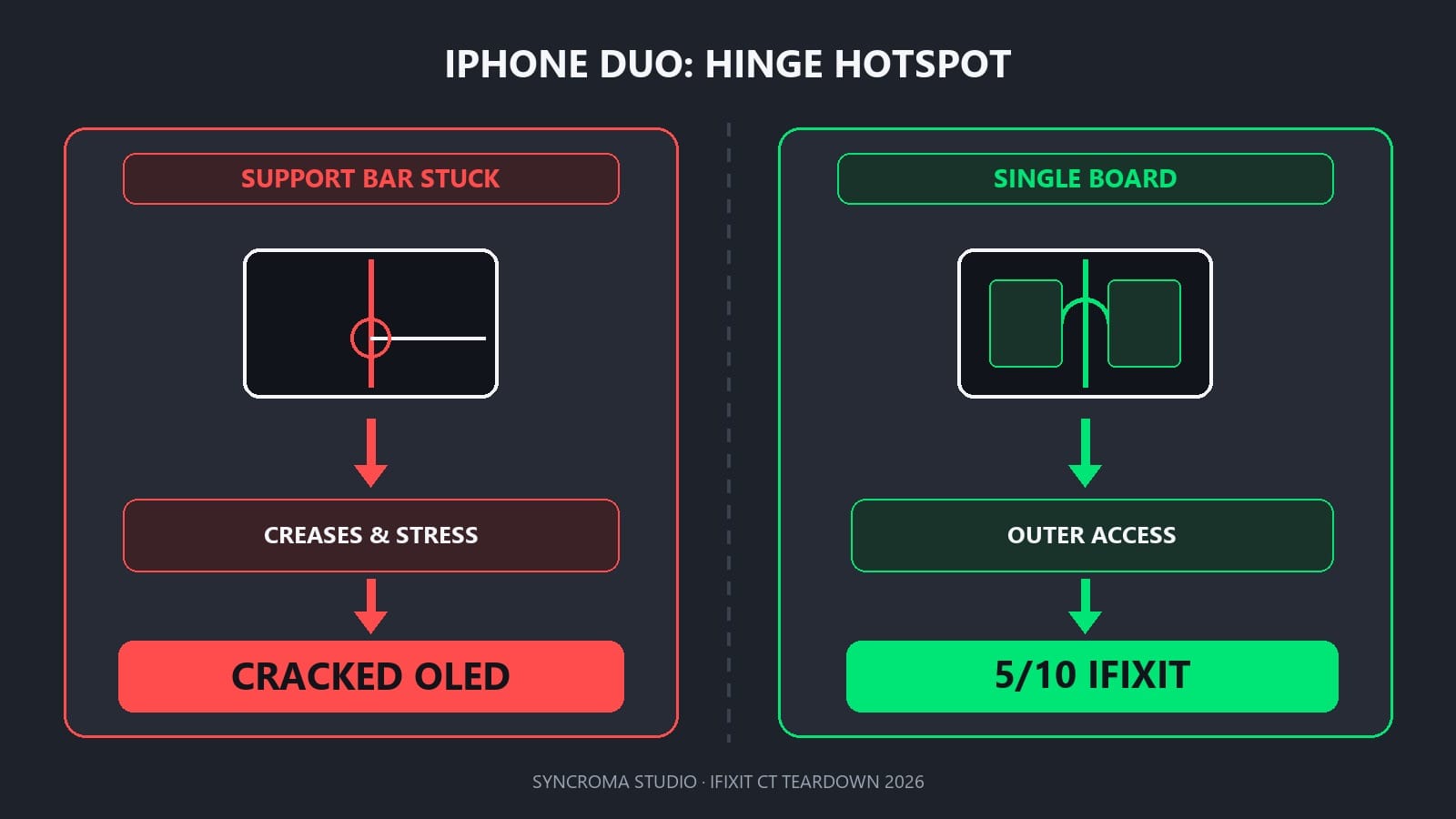
- Stress clustering right below the display flex gap: Breaks did not occur randomly across the glass. Instead, damaged rows and columns of pixels consistently intersected just below where the display flex cable passes through the central hinge—precisely where multiple structural edges meet and alter panel support mid-fold.
- A center support bar not dropping far enough: In iFixit’s closing simulation, when the center support bar fails to drop deep enough as the chassis shuts, the curved fold lands onto a localized pressure ridge, creating a mechanical hotspot strong enough to sever microscopic display traces.
- Office-sized dust inside moving hinge tracks: Even though Apple’s adhesive gaskets kept glowing powder out of main electronics better than several rival foldables, fluorescent fine dust testing still produced a crunchy hinge because ingress ratings protect the sealed enclosure—never the exposed sliding hinge rails.
| Mechanical Dimension | Observed iPhone Duo Behavior | Real-World Buyer Consequence | Verified Source |
|---|---|---|---|
| Early Inner Panel Failure | Intersecting dead-pixel white stripes soon after unboxing | Zero software fix; requires full unit swap | MacRumors / Fortune |
| Likely Root Stress Point | Insufficient clearance / stuck center support bar on fold | Tiny tolerances amplify any manufacturing variance | iFixit Teardown |
| Internal Modularity | Surviving outer screen removal, single-layer board, clean battery pull | Provisional 5/10 iFixit score (highest foldable ever) | 9to5Mac |
| Dust & Track Clearance | Fine particles reach moving hinge segments, causing crunch | Pocket grit accelerates wear despite enclosure sealing | iFixit Teardown |
The Foldable Paradox: Best Repair Score Meets First-Gen Risk
In an ironic twist, iFixit awarded the iPhone Duo a provisional 5 out of 10 repairability score—its highest mark ever for a foldable—praising clean battery release, an outer screen that survives disassembly, an unstacked logic board, and an early official repair manual, even if five distinct screwdriver types were needed to open it. Yet the inner flexible screen and hinge assembly still account for the heaviest cost and complexity deduction.
For ordinary buyers considering a first-generation foldable at $1,999+, two practical realities stand out:
- Replacement stock lags behind warranty promises: Even when free manufacturer replacement applies, tight initial retail allocations mean an out-of-the-box screen defect can leave owners waiting on replacement stock.
- The hidden recurring AppleCare+ tax: As iFixit noted drily, seeing fragile inner displays crack early nudges high-end buyers into paying another monthly insurance subscription just to sleep comfortably past year one.
Before committing to pricey first-gen hardware plus recurring protection plans or multi-year financing, run the total recurring cash outflow through our Annual Subscription & Recurring Spend Auditor or evaluate true financing APR with our Loan APR & True Amortization Calculator.
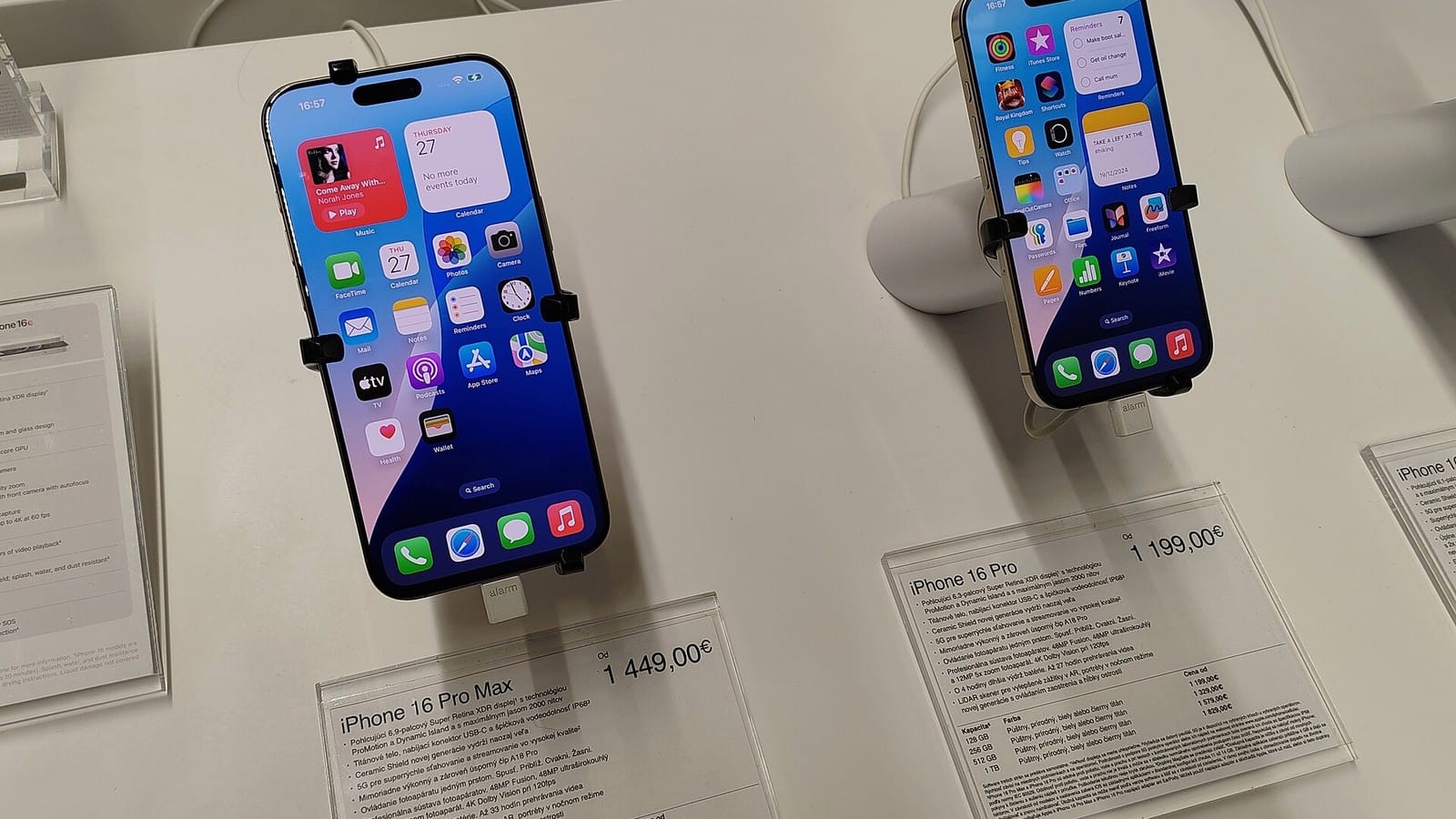
Visual credits: Retail iPhone hardware photograph by Jakub CA (Wikimedia Commons, CC BY 4.0) · Technical infographic generated by Syncroma Studio.

Sistemas reales, sin humo corporativo Real systems, zero corporate hype
Recibe los análisis a fondo sobre arquitectura, consumo de recursos y computación de bajo nivel directamente en tu bandeja de entrada. Get deep-dive software architecture, resource consumption metrics, and low-level computing essays delivered straight to your inbox.
Suscribirse a Syncroma Subscribe to Syncroma

