Hardcoding the Model into Silicon: Why AMD Bought a Chip That Can Never Be Updated
Why AMD acquired Taalas: etching an AI model directly into silicon eliminates memory bottlenecks and slashes production inference costs.
(🇪🇸 Leer la versión en español aquí)
Open LinkedIn on any given morning, and the prevailing narrative is that artificial intelligence is strictly a software discipline. That our biggest hurdles boil down to tuning loss functions, chaining cloud models, and hoping clever code papers over every underlying inefficiency.
It is a superficial reading that ignores the physical reality of servers.
Anyone managing technology budgets or production infrastructure knows the cold, hard truth: AI runs on bare metal that burns scorching amounts of electricity, dissipates immense heat, and costs an absolute fortune.
In mid-August 2026, semiconductor giant AMD made a multimillion-dollar acquisition that largely bypassed mainstream tech coverage, yet fundamentally reshapes the economics of computing: the purchase of Taalas, a startup that took a radical architectural route: building a chip where the AI model is physically etched into the metal and can never be updated.
To understand why this is a calculating business move, you first need to look at the primary bottleneck driving up the cost of every query you process today.
The Real Problem: The Master Chef Who Spends His Day Walking
Why are cloud bills and server invoices spiraling out of control across the corporate landscape? Because today's AI chips suffer from a fundamental, fatal design flaw for this workload.
Imagine you hire the greatest chef on Earth. He can chop vegetables and cook dishes at superhuman speed. But there is a glaring absurdity in his kitchen's layout: there are zero cupboards or shelves. Every single time he needs a pinch of salt, he has to leave the stove, walk a full kilometer down a long hallway to the warehouse, grab the salt, walk all the way back, and toss it into the pan. And when he needs pepper five seconds later? He has to make that exact same one-kilometer trek all over again.
That is precisely how modern AI accelerators operate:
- The processor is the super-fast chef.
- The memory is the distant warehouse.
When an AI writes a response, it doesn't formulate the entire sentence at once: it produces text word by word (or token by token). And to generate each individual word, the processor must haul the model's entire knowledge base across the wires from memory.
The result? Your chip spends 90% of its time and your electrical bill simply "walking" data back and forth, not computing. That’s why flagship AI cards cost upwards of $35,000 each: you aren't paying for raw intelligence; you are paying an exorbitant fee for an ultra-complex memory highway just to help the chef walk slightly faster.
The Radical Solution: Carving the Recipe Directly into the Kitchen Table
The team at Taalas took a brutally pragmatic stance. They said: "No more walking."
Instead of relying on a separate memory warehouse to fetch instructions, they physically carved the recipe and every ingredient directly into the steel surface of the kitchen table.
In semiconductor terms, this means you don't buy a generic processor and load AI software onto it. They manufactured a chip whose physical circuits and transistors are literally formed in the shape of a specific neural network (in this case, Meta’s open Llama model).
The chip doesn't execute the AI: the chip IS the AI.
By completely annihilating the walk to the warehouse, physics takes over:
- Blistering Velocity: While today's high-end GPUs churn out around 100 to 150 words per second, this chip clocks in at 17,000 words per second. An order of magnitude faster than conventional setups.
- Tiny Power Footprint: It runs on standard office workstation electricity and uses basic air cooling, bypassing the expensive liquid-cooling systems demanded by modern hyperscale data centers.
The Fine Print: It's Carved in Stone
Any pragmatic executive will immediately ask the million-dollar question: What's the catch?
The catch is uncompromising: zero flexibility.
This chip is literally cast in metal. If your company deploys a server rack packed with these chips and next month a newer, shinier AI model drops, there is no "update software" button. The chip cannot learn a new trick. To switch models, you would have to fabricate an entirely new physical chip.
For tech hobbyists who love chasing every weekly trend, this sounds like a dealbreaker. But for a business focused on operational P&L, the math looks entirely different.
Why Your Business Wants "Dumb, Blazing-Fast" AI
Be honest about what 80% of enterprise AI workloads actually require day-to-day:
- You don't need an omniscient genius writing sonnets or debating philosophy.
- You need to classify 50,000 incoming supplier invoices a day, extract the tax ID and line items, and push them to your ERP.
- You need to triage customer support tickets and route them in milliseconds to the right queue.
- You need to verify that vendor contracts match internal regulatory compliance checklists.
For that kind of unglamorous corporate plumbing, you don't need a volatile, multi-billion-dollar generalist model that changes every month; you need a reliable, ultra-fast hammer that costs pennies to run.
Having an un-updatable appliance in your own on-premise rack that crunches millions of routine tasks instantaneously—without leaking customer data to third-party cloud APIs and without paying astronomical monthly subscriptions—is a CFO’s dream.
Production Economics Over Cloud Hype
That is why AMD opened its checkbook. They know the era of reckless spending—where companies burned budgets leasing general-purpose cloud supercomputers for repetitive tasks—is drawing to a close.
Real progress in enterprise adoption won't come from abstract promises on social media; it will come from engineers re-architecting silicon so that data processing makes technical and economic sense.
The next time you read about the latest multi-billion-dollar model, remember the chef: the true efficiency leap isn't about packing in more parameters; it's about eliminating the walk to the warehouse.
Technical References & Further Reading
- AMD Investor Relations (August 2026): AMD Acquires Taalas to Advance Compute Solutions for Rapidly Growing AI Inference Market — Official press statement outlining the acquisition and dedicated inference strategy.
- Taalas: Taalas Inc. — Direct-to-Silicon AI — Official corporate portal and model-specific silicon architecture overview.
- Simon Willison’s Weblog: Taalas: Silicon Llama at 17,000 tokens per second — Technical analysis of the 17,000 tokens/sec benchmark and mixed quantization on Llama 3.1.
- Jon Peddie Research: AMD buys Taalas and a very different idea about AI inference — Architectural analysis on building dedicated silicon rather than general-purpose GPUs.
- StorageReview: AMD to Acquire Taalas: The Startup Building Silicon Around One Model — Detailed breakdown of memory wall elimination.
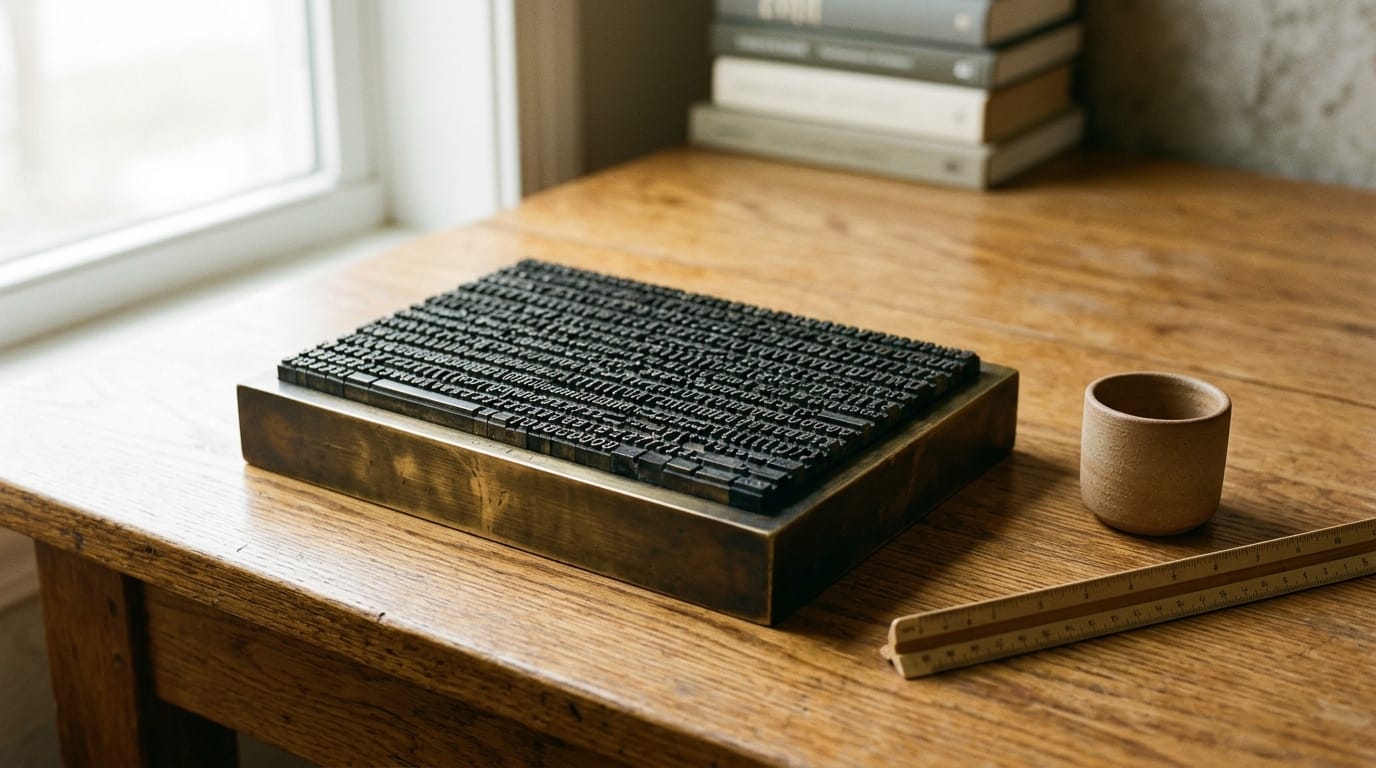
Image credit: Syncroma Studio. Analog conceptual still-life: immovable metal printing typesets hard-cast into a brass chassis on solid oak, symbolizing an AI model physically baked into silicon.
Sistemas reales, sin humo corporativo Real systems, zero corporate hype
Recibe los análisis a fondo sobre arquitectura, consumo de recursos y computación de bajo nivel directamente en tu bandeja de entrada. Get deep-dive software architecture, resource consumption metrics, and low-level computing essays delivered straight to your inbox.
Suscribirse a Syncroma Subscribe to Syncroma